Begin with what the client needs to understand.
A workout report is most useful when it answers a simple question: what did we work on together? Start there before deciding which numbers, charts or branding to include.
The aim is not to make a short session look complicated. It is to make the work easier to remember and your feedback easier to revisit. That can be as simple as a clear session summary and one thoughtful observation.
Give the report three clear elements.
1. A record of the work
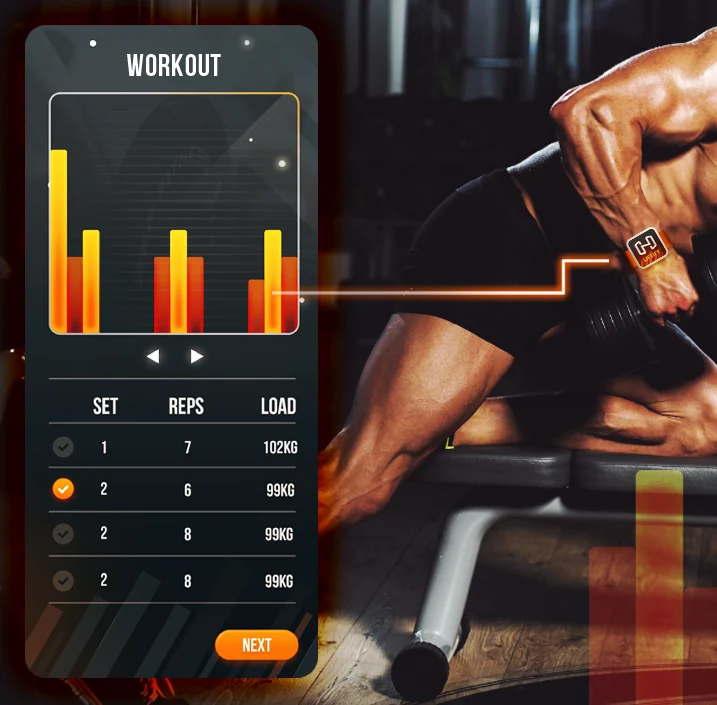
Identify the session and show the relevant exercises, sets, repetitions and load. Include other recorded metrics only when you can explain why they matter to this client.
2. A coaching explanation
Add the context that the record cannot supply on its own. Perhaps you repeated the setup from the previous session, practised a movement or adjusted the plan after speaking with the client. Explain the choice in ordinary language.
3. Your coaching identity
Keep your name or brand connected to the work. Liftify's original report examples include fields for the coach's name and Instagram account, giving the session summary a clear connection to the person who delivered it.
“Today we repeated the setup from last time and completed the planned sets. You said the final set felt more comfortable. We'll revisit both the record and your feedback in our next session.”
This example gives the client context without claiming that one number proves a result. Adapt the wording to what actually happened in the session.
Make the review a real part of your service.
If tracking and feedback are part of a coaching package, explain the deliverables before the client chooses it. A useful offer might include recorded sessions, a short explanation after training and a regular conversation about the records.
Be specific about the work you will do. Decide when you review the information, how you share it and what the client should expect between sessions. A sensor is a tool within that service; your time and attention are what make the offer useful.
- Choose a review rhythm you can maintain.
- Use the same clear report structure across sessions.
- Keep notes personal to the client and the workout.
- Ask which parts of the feedback they find useful.
Make sharing a choice.
A report sent privately to a client is different from a post on a public social account. Ask before sharing their personal information or results publicly, and let them choose whether they want to share a report themselves.
Branding makes the source of the coaching visible when someone chooses to share. It does not guarantee referrals or new customers. Keep the report helpful even when it stays entirely between you and the client.
Understand the cost of delivering the package.
When considering a paid tracking-and-review service, include the time you spend preparing feedback and discussing it. Any added fee should reflect the service the client values and chooses.
Liftify Sensor is a €149 one-time purchase with no subscription. You pay once and use forever. That removes a recurring Liftify subscription from the calculation, but it does not remove your own delivery time or other business costs.
The coaching package calculator lets you explore your own assumptions. Its results are illustrations, not income forecasts. Use them to ask whether the offer makes sense for your clients and your workload.
Let the report lead back to a conversation.
The best next step is not always another metric. It can be a question: “Does this match how the session felt?” or “What would you like us to revisit next time?”
That is the core idea behind making great coaching visible. Track the work consistently, explain it clearly and keep the person at the centre. When you are ready to add the tool, explore the Liftify Sensor kit.