Start with a coaching question.
Before deciding what to measure, decide what you want the record to help you understand. Did the client complete the planned work? Was the same exercise performed with a similar setup? What did you notice that should shape the next conversation?
This gives workout tracking a purpose. You do not need a screen full of metrics to deliver a thoughtful session. You need a record that supports the coaching you actually do.
Keep a small, useful session record.
For many client reviews, a clear starting point is the exercise, load, sets and repetitions, followed by a short note about the session. Add the client's feedback and anything important about the setup.
- What was planned: the exercise and the intended work.
- What was completed: the sets, repetitions and load recorded.
- What you observed: a brief note about technique, consistency or a change of plan.
- What the client experienced: their own description of the session.
These details make the numbers more useful. A lighter session following a demanding week does not tell the same story as a lighter session chosen to practise a movement. Your note preserves that context.
Make your tracking repeatable.
If you use a workout sensor, follow the placement instructions for the supported exercise. Keep the setup consistent when comparing sessions and record any meaningful change in technique, equipment or range of movement.
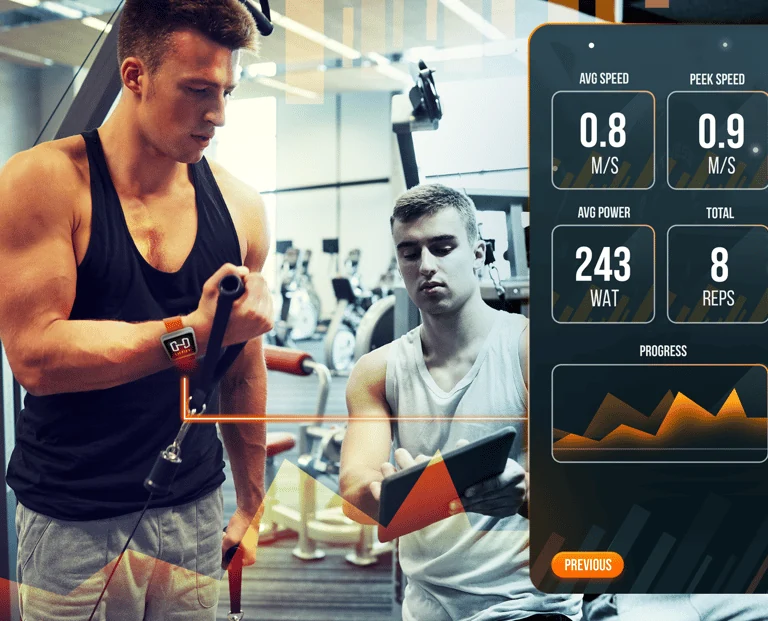
Liftify provides rep tracking on supported exercises, session records and estimated movement metrics. Those readings are a useful part of the record, alongside your observations. They are not a substitute for watching the client or asking how the exercise felt.
Changing the sensor position, exercise setup or movement can affect a reading. Small differences may reflect measurement variability. Put the numbers in context before treating them as a change in performance.
Build a simple before, during and after routine.
Before the session
Review the previous record and choose the point you want to revisit. Connect the sensor, select the client and supported exercise, and check placement before the first working set.
During the session
Keep your attention on the person. Let tracking support your notes, then check the record when it fits the flow of the session. If something looks unusual, check the setup and what actually happened before drawing a conclusion.
After the session
Choose one or two useful observations to discuss. Explain the work completed in plain language and add a short note for next time. Give the client an opportunity to describe their experience before you close the session.
Show the work without making the numbers the goal.
A clear explanation is often more valuable than an extra chart. “We completed the planned sets and kept the setup consistent” gives the client a concrete account of the session. A number on its own asks them to work out the meaning.
Use branded workout reports to keep that explanation connected to your coaching. Share client information with permission, and keep any personal feedback appropriate to the way you are sharing it.
Choose a tool that fits the service.
Before buying a workout tracker, confirm that it supports your exercises, device and intended workflow. Liftify requires a physical sensor and a compatible iPhone or iPad. It is a practical coaching tool using accelerometer-based estimates, not a laboratory-grade VBT or medical measurement system.
Liftify Sensor costs €149 as a one-time purchase. There is no subscription: pay once and use forever. The sensor, app and web dashboard support your workflow; your judgement gives the session meaning.